
Ecommerce-to-accounting integrations: the move to platform workflows
February 2026
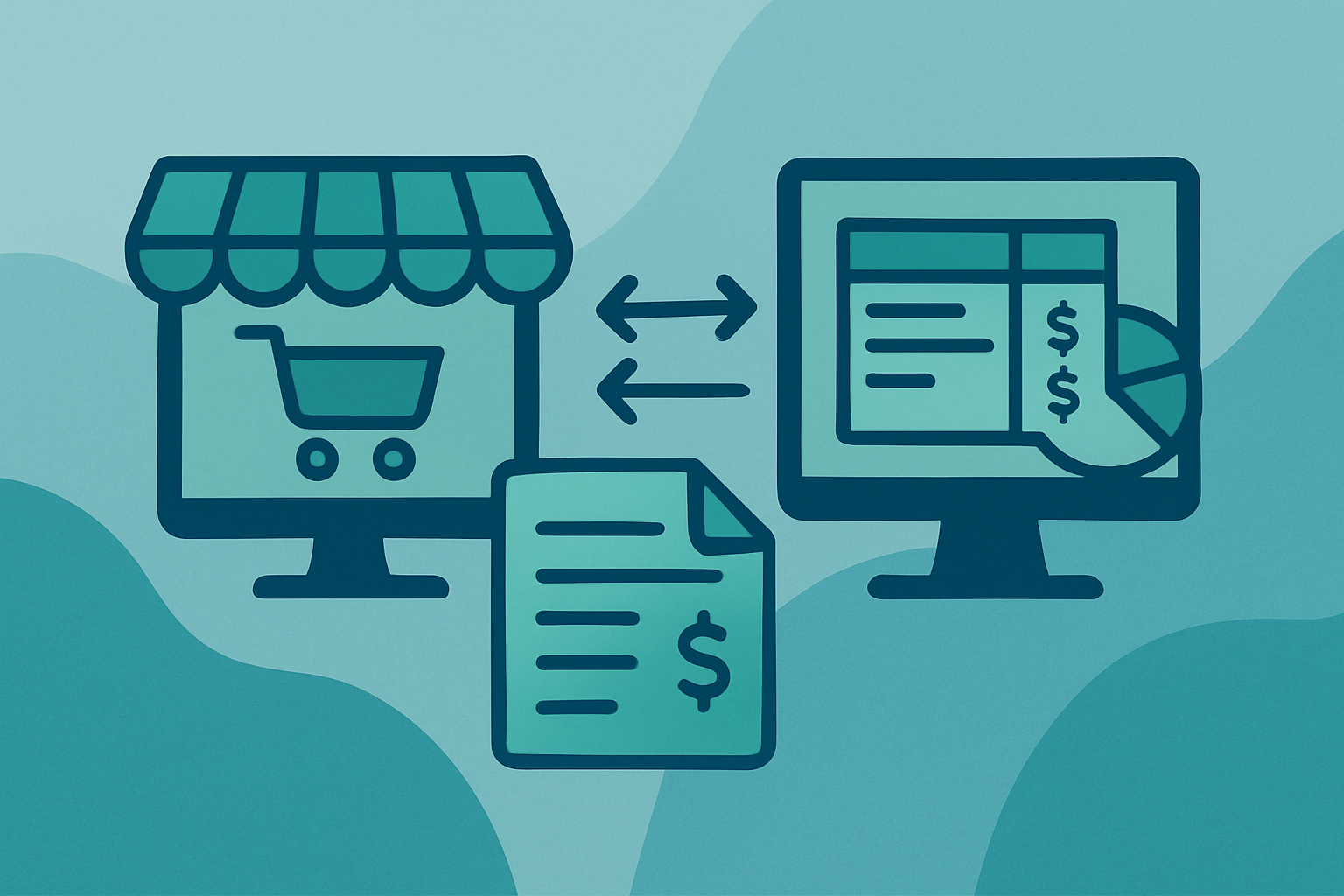
Ecommerce and accounting systems have always needed to “agree” on the basics: what you sold, what you collected, what you refunded, and what fees were taken out before the money hit your bank. A recent, practical trend in the integration landscape is that more of the workflow is being shaped by the ecommerce and accounting platforms themselves (and their built-in marketplaces, app review processes, and security requirements), rather than by custom scripts or one-off manual routines.
For small-to-medium online merchants and the accountants who support them, this matters because it changes what “good integration” looks like. It’s less about simply getting data across, and more about choosing a connection that fits your operational needs: settlement-based reconciliation, consistent tax handling, clean audit trails, and predictable month-end close. If you want background on what CarryTheOne connects and why that can reduce manual work, see CarryTheOne.
1) More emphasis on payouts and settlements (not just orders)
Many merchants still think about accounting sync in terms of orders: one order equals one invoice or sales receipt. That can work in some cases, but it often clashes with how money actually arrives. Card processors and marketplaces typically pay out in batches (daily, weekly, or on a rolling schedule), and those payouts reflect fees, chargebacks, currency conversions, and timing differences.
Across the ecosystem, integrations are increasingly expected to support a settlement-based view:
What it means in practice
- Cleaner bank reconciliation: When the accounting entry matches the net payout that lands in the bank, reconciling becomes faster and less error-prone.
- Better visibility of fees: Processor and platform fees can be captured as separate lines or accounts, instead of being “hidden” inside a net deposit that’s hard to explain later.
- Fewer timing surprises: Refunds, partial captures, and delayed payments are easier to trace when the accounting system reflects how the funds settled.
What to watch for
- How refunds are represented: Some workflows post refunds against original sales; others post them as separate negative receipts. Either can be valid, but you want consistency.
- How disputes/chargebacks are handled: Not all integrations treat them the same way, and some may require manual steps depending on your payment provider and platform.
- Multi-currency settlement: If you sell in one currency and settle in another, ask how exchange rates, gains/losses, and fee currency are captured. There is not a single universal approach across platforms.
2) Tighter permissions and security requirements are shaping integrations
Another noticeable change is that ecommerce and accounting platforms are tightening security controls: more granular permissions, stronger authentication, and closer scrutiny of apps in marketplaces. This is generally good for reducing risk, but it does affect day-to-day operations.
What it means in practice
- More structured app access: Connecting an integration may now require admin-level approval, explicit scopes/permissions, and periodic reauthorisation.
- Clearer responsibility: It’s easier to see which app has access to what (orders, payouts, customers, tax settings), which helps with internal controls—especially when an external accountant is involved.
- Potential for “silent breakages” to become “visible breakages”: Where older connections might continue running with broad access, newer policies can cause a sync to pause when credentials expire or permissions change. This is not always predictable, because platforms can update policies on their own schedules.
How merchants and accountants can adapt
- Document who owns the connection: Decide whether the merchant admin or the accounting firm controls the integration login. Shared responsibility often leads to missed reauthorisations.
- Use a simple change process: If someone changes tax settings, payment methods, or ecommerce checkout configuration, include “does this affect the accounting sync?” as a standard check.
- Schedule a quick monthly review: A 10-minute check of sync status, error logs (if available), and last successful run can prevent a messy quarter-end cleanup.
3) Tax and compliance complexity is pushing for better mapping (and fewer assumptions)
Tax calculation in ecommerce can be complicated: different jurisdictions, thresholds, inclusive vs exclusive pricing, shipping taxability, and exemptions. Meanwhile, accounting systems need consistent categorisation for reporting and filings. A practical trend is that integrations are expected to be more explicit about mapping and less reliant on assumptions like “all sales are standard-rated” or “shipping is always non-taxable”.
This isn’t about any single rule change; it’s about the reality that merchants increasingly sell across regions and channels, and accountants need transactions posted in a way that supports accurate reporting.
Practical implications
- More upfront setup: You may need to map product types, tax codes/rates, shipping, discounts, gift cards, and tips (where relevant) more carefully than in the past.
- Channel differences matter: The same product sold on your own site vs a marketplace can have different fee structures and sometimes different tax treatment. Your accounting needs to reflect that distinction if you want meaningful margins and correct tax reporting.
- Data quality becomes a monthly close issue: Inconsistent SKU usage, ad-hoc discounting, or changing tax settings mid-month can create mispostings that only become visible when reconciling payouts or preparing returns.
Questions to ask before you “set and forget”
- Does the integration post gross sales and fees separately, or only net deposits?
- How are discounts and shipping represented in the accounting system?
- Can you report by channel (e.g., Shopify vs marketplace) without manual rework?
- What happens when a tax rate changes or you add a new region?
Concluding checklist: a practical review for your next month-end
- Reconciliation fit: Are accounting entries aligned to payouts/settlements that match your bank deposits?
- Fees visibility: Are payment and platform fees posted clearly to the right accounts?
- Refunds and disputes: Do you have a consistent method for refunds, chargebacks, and reversals?
- Permissions ownership: Do you know who controls app authorisations and who will handle reauthorisation if needed?
- Tax mapping: Are products, shipping, discounts, and gift cards mapped to the right tax codes/accounts?
- Channel reporting: Can you separate performance by storefront/channel without exporting and rebuilding spreadsheets?
- Routine checks: Do you have a monthly “sync health” review to catch issues early?
0 Comments
Post a Comment
Subscribe to Post Comments [Atom]
← Home